


The Role of AI in Shaping the Future of Education
AI is revolutionizing various aspects of our lives, and education is no exception. According to Amy Eguchi, an education scholar at UC San Diego, the integration of artificial intelligence into schools has the potential to transform how students learn and how teachers teach. However, she emphasizes that this transformation must be approached thoughtfully and with a clear understanding of its implications.
Eguchi has spent decades working in the field of education, particularly in robotics and computing. Her involvement with RoboCupJunior, an international robotics competition for young people, has given her a unique perspective on how technology can be used to inspire and educate. She also advises the Los Angeles Unified School District’s AI Task Force and leads initiatives aimed at improving STEM education in refugee communities. These experiences have shaped her views on the role of emerging technologies in education.
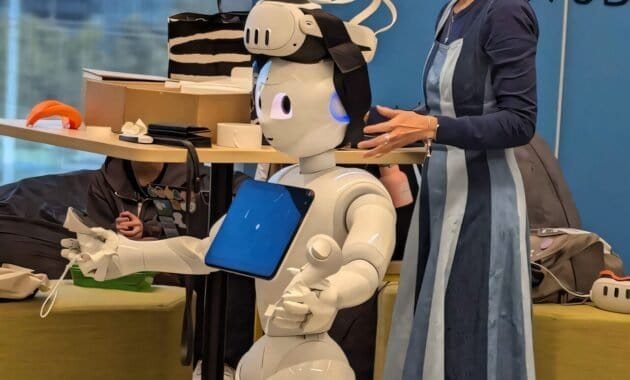
While some envision a future where robot teachers replace human educators, Eguchi believes this is still far off. Although robots are increasingly used in tasks like food delivery and cooking, they remain expensive and difficult to maintain. Their use in classrooms is not yet widespread. In contrast, AI tools are more accessible and already making an impact. From AI chatbots that help students with homework to concerns about students using AI to complete assignments, the influence of artificial intelligence on education is undeniable.
Benefits and Challenges of AI in Schools
Eguchi highlights three key aspects of AI in education: using AI, teaching with AI, and teaching about AI. However, she notes that much of the current conversation focuses only on the first aspect. This narrow view overlooks the broader opportunities and challenges that come with integrating AI into the classroom.
One of the biggest challenges is ensuring that teachers understand how AI works. Eguchi recalls a conversation with a kindergarten teacher who was anxious about using AI in her classroom because she didn’t fully grasp what it was. This situation reflects a larger issue: many educators feel unprepared to incorporate AI into their teaching practices. To address this, Eguchi advocates for AI literacy among teachers and emphasizes the importance of providing them with the support they need to integrate these tools effectively.
Another concern is the appropriate use of AI in different age groups. Younger students may require simpler tools, while older students might benefit from more advanced applications. Additionally, privacy issues must be carefully considered when implementing AI in schools. Despite these challenges, Eguchi remains optimistic about the potential of AI to enhance education.
Transforming the Educational Landscape
Eguchi sees AI as a potential turning point for education, which has remained largely unchanged since its inception. She believes that AI could lead to a more dynamic and personalized learning experience, helping students develop the skills they need to thrive in a rapidly changing world.
However, she cautions that the success of AI in education depends on how it is implemented. If not done thoughtfully, it could have negative consequences. Eguchi draws parallels between the introduction of computers and smartphones in schools and the current shift toward AI. Just as society adapted to those changes, it will need to adapt to the integration of AI as well.
In this new educational landscape, the focus should shift from rote memorization to deeper learning. Students will need to develop critical thinking skills, such as analyzing and evaluating content for accuracy. Since current AI tools are not always reliable for fact-checking, students must learn to verify information independently.
Preparing Educators for the Future
As a teacher of teachers, Eguchi emphasizes the importance of hands-on learning in preparing future educators to use AI and robotics in their classrooms. In her courses, students first engage with educational robotics kits themselves before learning how to teach with them. This approach helps them gain a deeper understanding of the tools and the challenges involved in using them effectively.
Unlike subjects such as math or writing, where students often have prior knowledge, AI, robotics, and computer science are relatively new areas. This means that educators must first become comfortable with these tools before they can teach them effectively. By prioritizing experiential learning, Eguchi ensures that her students are well-prepared to bring these technologies into their own classrooms.
Looking Ahead
Eguchi concludes that AI holds great promise for education, but its implementation must be intentional and inclusive. She stresses the importance of ensuring that all students and teachers have access to high-quality learning opportunities. As AI continues to evolve, so too will its role in education.
She also points to the growing connection between AI and robotics, noting that future robots will be equipped with advanced AI capabilities. While this development is still in its early stages, it could lead to significant advancements in the years to come. For now, the key is to proceed with caution, ensuring that AI is used in ways that benefit both students and educators.